How Investing in Employees and Systems Drives Company Value
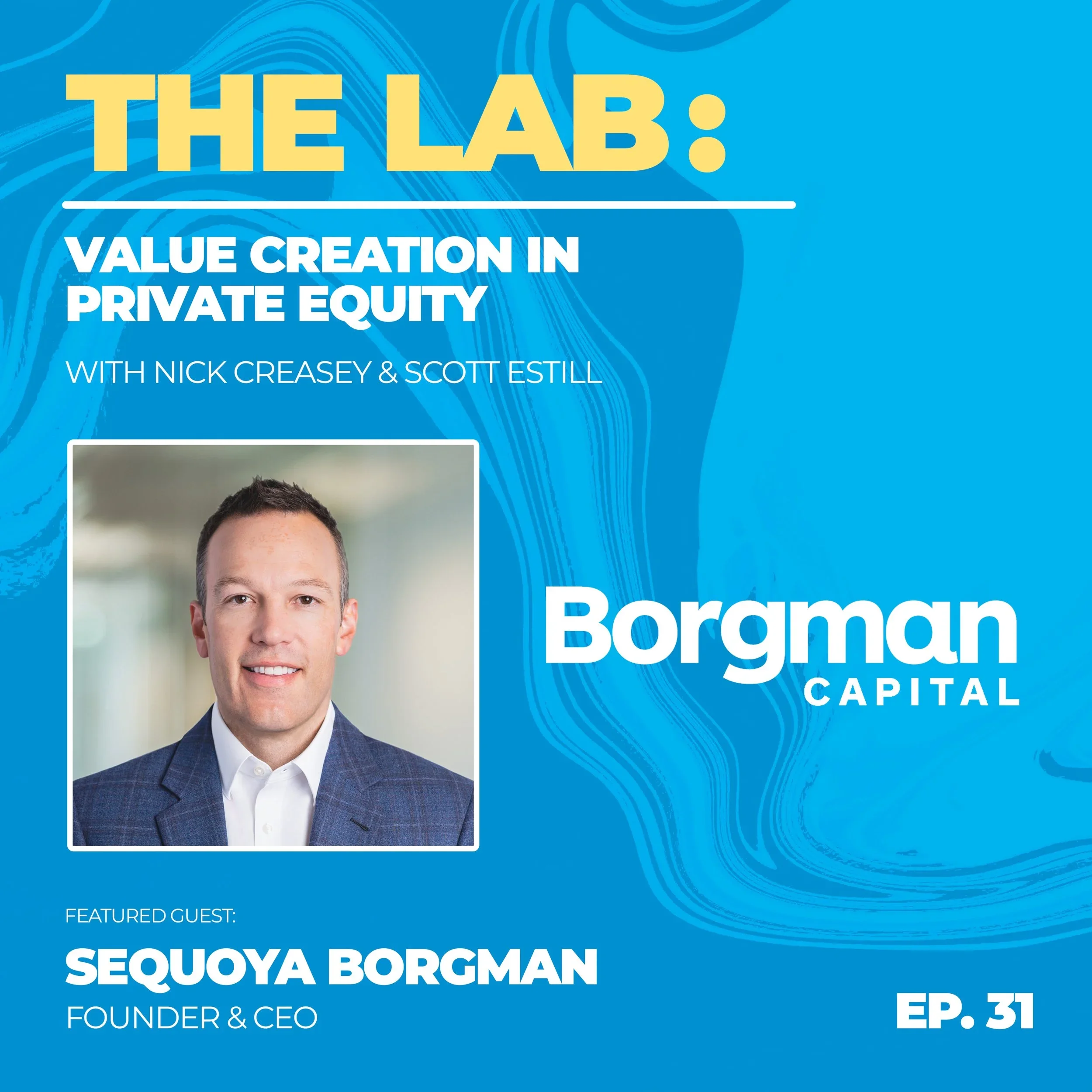
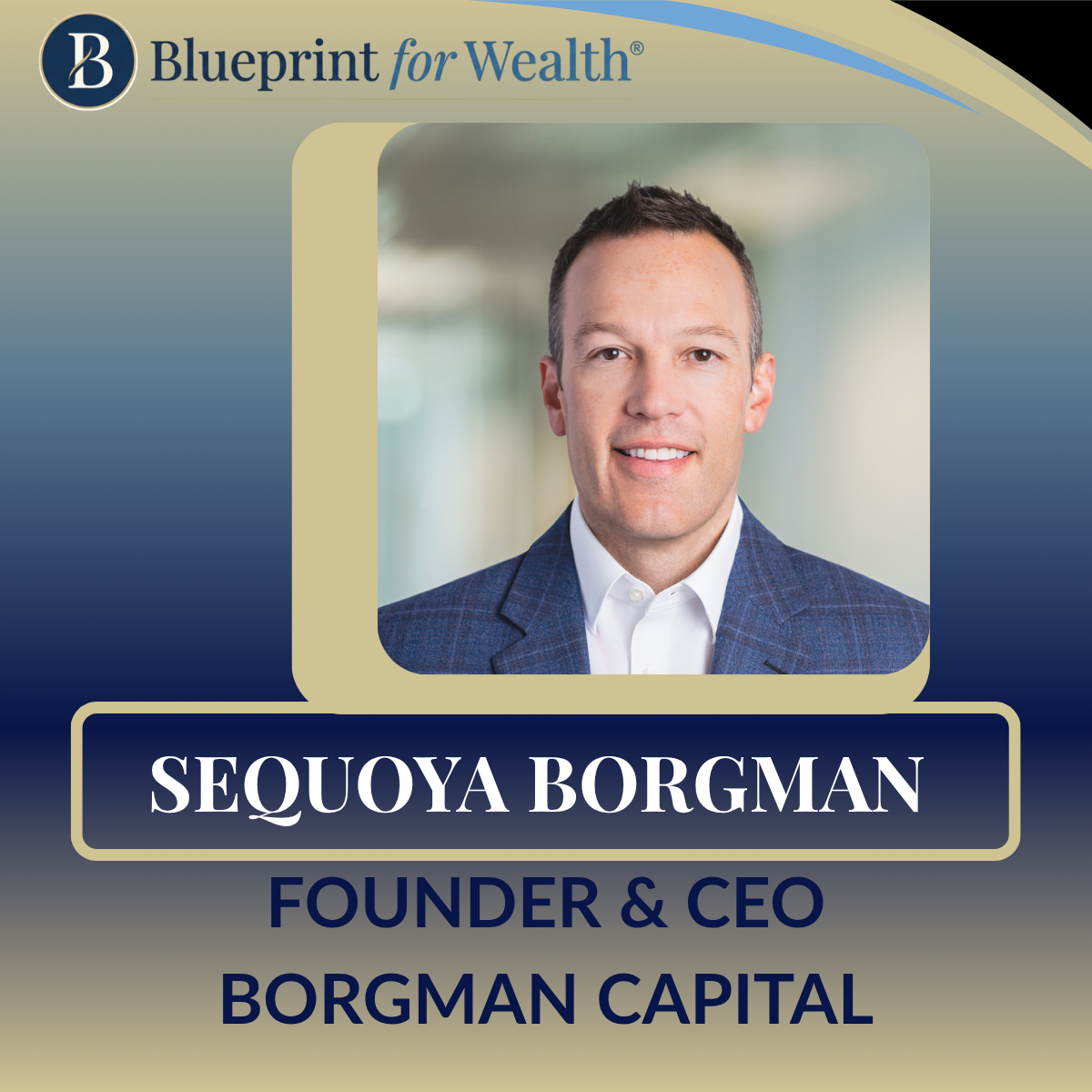
On this episode of The TechEd Podcast, host Matt Kirkner speaks with Sequoya Borgman, Founder and CEO of Borgman Capital, about the fundamental drivers of business valuation in the lower middle market. Drawing from his personal journey—from working second shift on a factory floor at age 16 to leading a Milwaukee-based private equity firm—Sequoya shares how human capital, technology, and operational preparation intersect to create durable enterprise value.
For business owners considering an exit, corporate leaders managing labor constraints, and regional workforce policy makers, this conversation breaks down the practical realities of lower middle market transactions. Sequoya explains why excessive dependence on a single founder discounts a company's market price, how automation serves as an engine for workforce growth rather than job elimination, and why regional labor availability belongs in every serious investment due diligence framework.
Listen to the full interview with Sequoya Borgman on The TechEd Podcast.
Key Takeaways
Professionalizing Management Two to Five Years Before Exit Protects Valuation
A central risk in lower middle market acquisitions is founder centrality. When a founder holds decades of primary sales relationships, operational know-how, and decision-making authority, the enterprise value remains tied to that individual. If an owner retires at closing without a succession structure in place, the buyer faces the immediate cost and risk of hiring multiple professionals to fill the void. Because scalable and lease-based technology solutions are increasingly accessible down-market, operators must treat technology modernization as a recurring annual line item. Continuous upgrades protect margins, streamline back-office operations, and ensure the company remains competitive.
Automation Addresses Labor Scarcity to Enable Business Scale
Automation, robotics, and cobots are often misunderstood as tools meant to reduce workforce headcount. In operational reality, technology implementation is an essential response to severe regional labor shortages. When companies face low unemployment rates and struggle to fill open positions, growth stalls unless productivity per worker increases. Automating repetitive production processes and administrative data analysis allows businesses to handle higher demand without relying solely on expanding headcount. Rather than displacing workers, automation preserves business continuity and unlocks capacity for higher-value tasks.
Workforce Availability is a Core Parameter of Acquisition Diligence
Evaluating an acquisition candidate requires analyzing the regional labor ecosystem alongside standard financial, legal, and environmental checks. A company may display strong historical demand, but if it operates in a geographic market with exceptionally low unemployment and a restricted talent supply, future revenue growth will hit a ceiling.
When investment diligence uncovers local hiring constraints, buyers must explicitly factor labor solutions—such as upskilling programs, flexible shift scheduling, or targeted automation equipment—into their underwriting thesis from day one.
Questions Addressed in the Conversation
Why does founder dependence lower the price a buyer is willing to pay for a company?
When an owner personally manages key client accounts, technical decisions, and day-to-day operations, the company’s goodwill resides in the individual rather than the business infrastructure. If that owner retires following a transaction, the value risks walking out the door. Because a buyer may need to hire three to five specialized executives to replace one founder's responsibilities, the added overhead cost and transition risk lower the net enterprise valuation.
How can lower middle market businesses address ongoing talent shortages?
Beyond investing in automation equipment, companies can deploy targeted workforce retention strategies. One effective approach is re-engaging "boomerang hires"—former employees who left within the past two or three years and already possess operational familiarity. Additionally, employers can reduce turnover by offering flexible shift hours, upgrading benefit structures, and improving shop-floor working conditions to avoid placing unnecessary training strains on incumbent staff.
What prevents established middle market companies from scaling past $10 million or $30 million in revenue?
Companies frequently plateau not due to a lack of market opportunity, but because the owner attempts to maintain total micromanagement. A single founder has a finite capacity for daily decision-making. Without delegating operational authority to an empowered management team or hiring a professional president, the owner becomes the bottleneck that caps the firm's growth potential.
From the Conversation
“Achieving the American Dream is what private equity does for a lot of entrepreneurs, family businesses, and founders when they’re looking for an exit. Private equity pools capital together to purchase those companies, be the stewards of those companies, maintain them, and really take care of the great organizations that these founders and entrepreneurs have built.”
-
This transcript has been edited for clarity and readability. Please refer to the original podcast recording for the complete conversation.
Introduction to Private Equity and Lower Middle Market Acquisitions
Matt Kirkner: Welcome to The TechEd Podcast, where we visit with leaders who are shaping, innovating, and disrupting technical education—people who are not afraid to think differently, not afraid to try something new, all with the goal of securing the American Dream for the next generation of STEM and workforce talent.
My name is Matt Kirkner, and I will tell you right now that I am a big, big fan of the private equity world. So if you are a technical educator, an industrial employer, or a public policy maker, you are going to learn a ton today, and all of it is going to be relevant.
I'm also a big fan of positive disruption, accelerating results, cutting waste from processes, and, in the right application, private equity. I have served as CEO of a private equity-backed company for several years, and I do a fair amount of strategy work and investing in the world of private equity now.
We are going to talk about what private equity is and how it works, but we're also going to talk specifically about how technologies like artificial intelligence and machine learning are disrupting private equity and finance, how a quality trained workforce adds value to a company and to how a private equity investor looks at value, how the availability of skilled talent and localized technical education affects company value, and how those factors affect where investors want to invest their money.
We have a really fascinating conversation on this world of private equity with a leader in the field. His name is on the building at Borgman Capital: Sequoya Borgman, Managing Director. Sequoya, thanks so much for being with us.
Sequoya Borgman: Thanks for having me. I'm looking forward to talking to you this morning.
Matt Kirkner: As you probably gathered from that intro, the world of private equity might be a little bit new to some of our audience members. In a minute or two, could you tell us a little bit about what private equity is and how the model works?
Sequoya Borgman: Achieving the American Dream is what private equity does for a lot of entrepreneurs, family businesses, and founders when they're looking for an exit. Private equity pools capital together to purchase those companies, be the stewards of those companies, maintain them, and really take care of the great organizations that these founders and entrepreneurs have built.
Our firm is focused really on lower middle-market leverage buyout acquisitions. We're looking for companies all over the country that have strong balance sheets, established management teams, great products, and great business models where the founder or owner is looking for a succession plan. We are one option there among many—you can sell to your employees, do an ESOP, do an IPO, or sell to private equity. We try to be great stewards of those businesses that have been built.
Matt Kirkner: When you talk about lower middle market, that may or may not be a term familiar to our listeners. How would you define that in terms of the size of companies you're typically looking at?
Sequoya Borgman: We're Milwaukee-based, so we have a Midwest, conservative focus. We're looking at Midwestern and national companies that are usually under $100 million or $150 million in revenue. They are nice companies that haven't necessarily put the infrastructure in place to do an IPO or some of the bigger options, but they are established, good companies that have been around 50, 60, 70, or 80 years with nice products and management teams.
Matt Kirkner: In my 23 years of leading manufacturing companies, primarily here in the Midwest, that was always my sweet spot. I always liked those smaller to medium-sized companies where you can make a decision on Monday, implement it on Wednesday, and see the results on Friday.
Sequoya Borgman: That might be a little bit optimistic! If you can implement things that fast, you should come run a couple of our companies.
Matt Kirkner: I had a lot of fun in my time in private equity, without a doubt, and had some great partners during that time. I was blessed to have that experience, and I'm blessed now to work on securing the American Dream for the next generation of the workforce.
We're going to get into much further depth on how workforce development and training affect the value of a company, but before we do, I want to get into your own journey. A lot of times, people have a specific paradigm about folks working in finance or private equity. Your story is a little different. Tell us about your background and how you found your way to what you're doing now.
From the Factory Floor to Private Equity
Sequoya Borgman: My background is a little bit different. I started out in public accounting. Most private equity firms are founded or launched by someone coming from investment banking or spinning out of a larger private equity firm.
I started out with a large Big Five accounting firm after getting my master's in accounting. I learned the private equity and transaction side really from the accounting side of the business—working on mergers and acquisitions, private equity rollups, and structuring transactions. That is how I learned the business and got introduced to private equity. A little over five years ago, I left to launch the firm.
Matt Kirkner: You and I are both what I call recovering accountants. I started in the same world, was a CPA for a number of years, started as a controller for a manufacturing company, and fell in love with manufacturing. I understand you have a background in manufacturing earlier in your career as well.
Sequoya Borgman: That is correct. I worked my way up through high school and college in manufacturing. I worked on assembly lines and know that side of the business well. Then I started out with Arthur Andersen right out of college and worked on manufacturing businesses there. I always say accounting is the language of business. If you can read financial statements, you really understand what's going on with a business. There's no better background than knowing the finance side of a business.
Matt Kirkner: People often assume that folks in finance grew up with a silver spoon in their mouth and fell into a great opportunity. It doesn't sound like that was your pathway either. You started from humble beginnings and worked your way up.
Sequoya Borgman: I was very fortunate to get where I am right now, but it didn't start that way. I was raised by a single mother who never graduated from high school, so we didn't have the best means. We definitely grew up on the wrong side of the tracks.
My first job was working in a factory when I was 16 on second shift alongside grown adults who had been doing the same thing for 30 years. I did that all through high school and college, and it really gave me the work ethic that everybody needs to be successful in anything they do.
Matt Kirkner: That is such a phenomenal story. We talk so much here on the podcast to students who listen to us, and one of our big messages is that where you start out doesn't have to determine where you end up. If you understand how to navigate the right path, educate yourself, and stay dedicated, it's incredible what you can achieve regardless of where you started.
Borgman Capital's Portfolio and Investment Philosophy
Matt Kirkner: Lessons learned in manufacturing can benefit you in the world of private equity. What lessons would you say you learned in manufacturing that have benefited you?
Sequoya Borgman: The Midwest is a hotbed of great manufacturing companies. We've been fortunate to acquire 15 companies since we launched, and over half of them are manufacturing businesses.
The United States, and the Heartland in particular, produces some very nice, highly engineered, world-class products. We can compete with anybody in the world with the manufacturing resources we have here. The cutting-edge technology coming out—newer automation, robots, cobots—is being implemented around the country, and we're fortunate to be involved with those technologies and opportunities.
Matt Kirkner: That world of robotics, automation, and cobots is so fascinating. The week we are releasing this podcast, our producer Melissa Martin and I will be broadcasting live from the International Manufacturing Technology Show in Chicago, seeing all that technology evolving in manufacturing.
The private equity model involves pooling capital from investors to build a portfolio of companies, growing those companies, making them something greater, and creating value for investors over time. Tell us a little bit about the portfolio companies you are involved with presently.
Sequoya Borgman: We've bought companies in the telecom space and food space—we really like the food space, which are mostly manufacturers. We've bought material handling companies, a material handling distributor, an equipment rental business, and a business that manufactures wear parts for equipment used in mining, aggregates, roads, and bridges.
We've bought all kinds of businesses. We are very opportunistic. Our focus is on nice businesses that have been around a long time, have a great management team, and offer nice, steady, conservative cash flow.
Matt Kirkner: That sounds like a great cross-section of Midwestern companies. As we drive around Wisconsin and the Midwest, that is quintessential manufacturing.
De-Risking the Business and Succession Planning
Matt Kirkner: Creating an exit opportunity and value for a business owner or group of owners helps them take some chips off the table and create the future they are looking for. Maximizing value at exit is key. When you look at the value of companies, what key factors raise or lower a company's value?
Sequoya Borgman: The main thing is that when an owner wants to retire, a lot of the value in most of these companies is locked up in that single person. They've been there since day one, founded the business, or grown it for many years. They have all the relationships, insight, know-how, and handle a lot of sales.
That actually reduces the value of the business because that person is going to have to be replaced. A lot of times, you can't replace them with just one person because no single person knows everything the owner knows. You might have to replace them with three, four, or five people, and the cost of bringing on a professional management team reduces the value of the business.
Owners should start thinking two, three, or five years before they want to exit about professionalizing the business, institutionalizing their knowledge, and having other people lead the functions they've taken ownership of. The better they transition that, the more they're going to get for their business.
The big risk for an investor is buying a business, having the owner retire, and watching all that value walk out the door. If you can take some of that risk out of the investment, from our standpoint, we'll pay more for that business than one where we have to take on that risk and invest the time and effort. It's really hard to replace an owner.
Growing a company and being an entrepreneur takes a unique individual to take all those risks. Most of their net worth is tied up in the business because they've reinvested every dollar made for decades. That's why it gets sizable enough to get our attention.
We create a liquidity event for these owners so they can diversify, take risk off the table, stop personally guaranteeing all the loans, and sleep at night. It's great for these entrepreneurs, but it's not for everybody. It's there for those who want to retire and maybe move to Florida or wherever people are moving these days. We are a perfect option for those individuals.
Matt Kirkner: It is hard to replace an owner, and hard for a small to mid-sized business owner to hand off those responsibilities. In your brain, you feel nobody can do it better than you, so you want to keep control. Starting three to five years ahead of time to professionalize the leadership team in finance, business development, technology, or engineering creates more value in the organization.
Technology, Automation, and Solving Labor Shortages
Matt Kirkner: Business leaders and educators frequently talk about how technology is disrupting their space. We talk about data analytics, machine learning, and artificial intelligence. Are those same technologies transforming private equity? Are you using new methods of gathering and analyzing data to evaluate potential investments?
Sequoya Borgman: Of course. Any organization not using the latest technology is falling behind. The world is changing at such a fast pace that if you're not using the most up-to-date modeling and data analysis available, you will be passed by your competition.
We use the latest technology we can as a firm, and all our portfolio companies are upgrading or using the best technology available. One concern for middle-market and lower middle-market businesses is that they don't have the resources to invest in technology the way big companies do.
The good news is that a lot of these technologies are scaling down-market. There are ways to lease technology without a huge upfront investment, but you have to budget for it every year to stay ahead. If not, whoever buys the company will have to make that investment and will pay less for the business as a result, so it is a key value driver.
It also helps with labor. The labor shortage is one of the largest challenges any business is facing these days. Better technology allows you to automate not just manufacturing processes, but also data analysis and back-office functions.
Matt Kirkner: Several years ago, people used to ask if robots were going to take all the jobs, fearing automation. What we've found is the exact opposite: the lack of skilled talent is holding us back and necessitating automation to meet demand, not to replace people.
Labor Markets and Due Diligence
Matt Kirkner: Workforce issues are central to what your portfolio companies face. How do workforce talent and employee training opportunities factor into your perception of company value?
Sequoya Borgman: Once we acquire a company, no matter what you hear about private equity, our primary incentive is for every company we acquire to be phenomenally successful, continue growing, and build on the legacy the owners established.
The biggest challenge with growing a business is finding labor—not just skilled labor, but unskilled labor as well. There is a huge shortage across the country. To grow these businesses, you either have to train unskilled labor to create skilled labor, or automate some of those functions. We're not replacing people; we're trying to meet our investment criteria by growing these businesses.
Matt Kirkner: Are there creative examples from your portfolio of how companies are addressing the shortage of workforce talent?
Sequoya Borgman: We are really focusing on "boomerang hires"—people who left over the last two or three years. They are already trained up and worked at the company, but sat on the sidelines or went to try something else. Those are great hires.
It is very expensive to train new employees. Not only is there a financial cost, but it's frustrating for current employees to take time out of their day and tasks to train new people, which can lead to higher turnover.
We've focused on improving benefits to retain employees, being much more flexible around shifts and hours, and improving the working environment. We've tried many avenues, but unemployment is very low across the country, making it hard to find good, skilled manufacturing labor.
Matt Kirkner: When going through due diligence under a letter of intent, you do a deep dive into the business to evaluate risk and growth potential. How does regional workforce availability factor into your due diligence process?
Sequoya Borgman: We definitely look at it. We bought a company earlier this year in a county with very low unemployment. It was clearly part of our diligence that it would be hard to grow that employee base. They had tried a lot of things, including work release programs, to fill positions.
We knew going in that we would either have to do more with the same number of people by helping them accomplish more, or automate and bring in new equipment. That was part of our investment thesis.
Financial due diligence, legal diligence, environmental, and customer diligence are fairly straightforward, though there are gray areas. But the people side of the business is the one area where you really have to use your gut. Do you trust the owners? Do you build a good relationship with them? Is the management team telling you what you want to hear, or telling you the truth?
Once you buy a company, it's a long-term partnership with the management team. Every company we buy, we set aside a large chunk of equity for that management team to buy in or earn if they hit our targets, aligning their interests with ours. These management teams become owners. It comes down to whether we can find the talent to continue to grow the business. It's a huge part of the diligence process.
Matt Kirkner: If things go right, an exit event can go really well for the management team through their partnership with a private equity investor. But whatever is discussed in pre-acquisition management meetings, you have to live by on the other end of the transaction.
This also speaks to public policy. Economic development leaders in Southeast Wisconsin tell me that whenever a large company looks at investing in our region, their first question is about workforce: technical colleges, community colleges, workforce development, and whether companies build training into their culture. It impacts the value of individual companies and the economic success of an entire region.
The Future of Midwestern Manufacturing
Matt Kirkner: We are both based in Milwaukee, Wisconsin. The corridor running from Oshkosh down through Chicago is one of the busiest manufacturing corridors in the country. What is your take on the future of Midwestern manufacturing amidst all this evolution in technology and automation? Is it a good place to invest?
Sequoya Borgman: I think it's a great place. Over the last couple of years, with the rising costs of transportation, shipping, and logistics challenges of getting things back domestically, a lot of companies have reinvested in their domestic businesses.
Because this region has manufacturing and engineering capabilities, it's going to be a huge boom for a long period of time. A lot of those supply chain investments are just now being made. If you're building a new manufacturing facility, you're looking 18 months or two years out. If you're bringing in new equipment, you're looking at 12 to 18 months for that equipment to arrive.
It's going to be a huge boom for the next couple of years as this capacity comes online, creating great jobs and opportunities for the region. Given current geopolitical challenges, I don't see that reversing. Wage differentials are coming down because of automation and manufacturing capabilities. Having a shorter supply chain is much more important than a slightly higher cost of labor.
Matt Kirkner: I see it the exact same way. One silver lining of recent disruptions is that people outside of manufacturing now understand the value of regional manufacturing. Having production closer to the point of consumption reduces variability and barriers. Using automation to drive cost out mitigates the competitive benefits low-cost regions used to have.
Actionable Advice for Business Owners and Young Professionals
Matt Kirkner: Aside from building a professional management team, what is one thing a company owner could implement to raise the value of their business?
Sequoya Borgman: Right now, with inflation, you have more pricing power due to current demand. Anything you can do to increase your margins is definitely going to help your business. Showing a buyer that you have long-term customers who have been with you a long time increases value. Upgrading IT, HR, and other systems helps as well.
Even if you're not thinking about selling, you cannot micromanage a business and continue to grow it. There are only so many hours in a day, and an owner can only do and micromanage so much. Many businesses plateau at $10 million, $20 million, or $30 million not because the business lacks opportunity, but because the owner is trying to do too much and becomes overwhelmed, or reaches a comfortable lifestyle where they have no incentive to grow further.
We continually want to grow those businesses, which is one of the primary values private equity brings.
You don't necessarily have to sell the business either. You could hire a professional president, incentivize them with equity, and take a more hands-off approach—moving to Florida, Arizona, or Texas—while letting a professional management team run the business and maintain your lifestyle. I'd prefer you sell it to us, but successful entrepreneurs have lots of options. Take the time to think through what you truly want out of the business.
Matt Kirkner: Micromanaging stifles growth for the rest of the team. If team members want to take on more responsibility, being micromanaged makes it hard to expand that next level of leadership, and top talent will go elsewhere.
If a business owner is interested in selling their company, or an investor wants to learn more about private equity, how can they connect with Borgman Capital?
Sequoya Borgman: They can visit our website at borgmancapital.com. My contact information is on the site, and we can connect through there.
Matt Kirkner: If you could give one piece of advice to a high school sophomore considering their future career pathway, what would it be?
Sequoya Borgman: Take risks early in your career. Learn about capitalism and entrepreneurship. Most wealth in this country has been built through entrepreneurship or capitalism.
Take risks early when you don't have as much to lose. Go start a business, or learn about a business and then start your own. Get on the ownership side early in your 20s. There is no better time to start entrepreneurship than right out of school.
Matt Kirkner: Looking back, it was a lot easier to take risks in those first few years out of school than later on when you have a mortgage, kids, and additional responsibilities that add weight to that risk.
What a wonderful conversation today, Sequoya—learning about private equity, growing business value, and the importance of workforce training and availability in determining company value. Thank you for spending some time on The TechEd Podcast today.
Sequoya Borgman: Thank you for having me.