The People of Private Capital: Democratization of Private Capital & 'Passing the Hat'
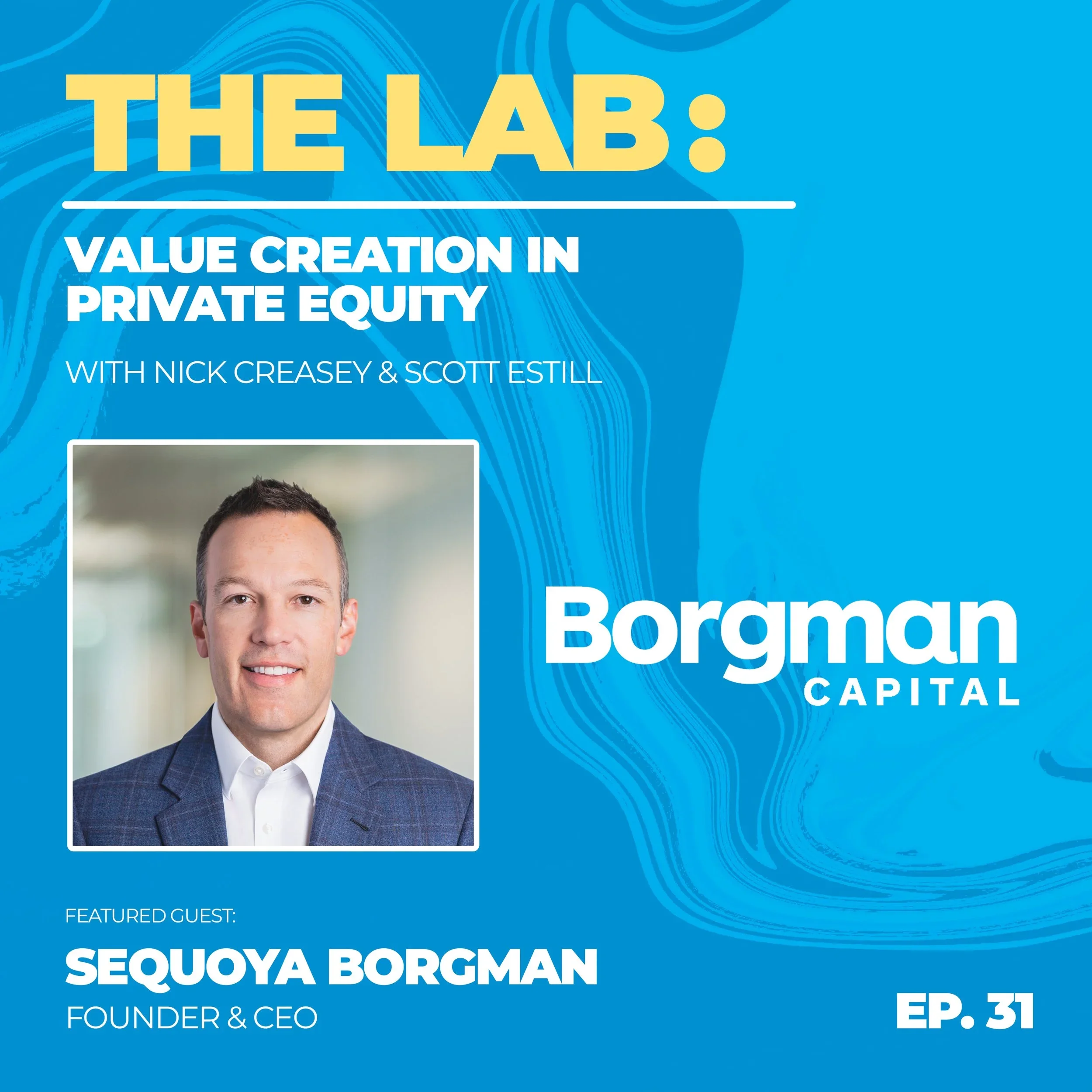
Sequoya Borgman joined Ferdinand Roberts, CEO and Founder of Asset Class, on The People of Private Capital podcast to discuss lower middle market investing, relationship-driven deal sourcing, and the evolution of Borgman Capital. Reflecting on his journey from working second shift in an industrial plant to founding an independent private equity firm, Sequoya outlines what it takes to build lasting partnerships with family-owned businesses.
The conversation details Borgman Capital's focus on established, cash-flowing lower middle market companies seeking succession plans or growth equity. Sequoya highlights the firm's expansion into commercial real estate and explains the strategy behind Pass the Hat, an initiative designed to provide accredited high-net-worth investors and family offices direct access to private market opportunities. For business owners, advisors, and accredited investors, the discussion offers practical insights into deal sourcing, leadership transitions, and long-term value creation.
Listen to the full conversation between Ferdinand Roberts and Sequoya Borgman to learn more about PassTheHat.com, Borgman Capital's investment approach in the lower middle market, and strategies for sourcing off-market deals.
Key Takeaways
Direct relationships yield the strongest off-market opportunities
Broadly marketed auction processes for lower middle market companies are often crowded and competitive. The highest quality investments frequently stem from direct introductions to business owners built over extended periods. Founders who have spent decades building a company care deeply about their employees, community, and legacy. Establishing a direct relationship allows an investor to structure fair terms while reassuring the seller that their business will be stewarded responsibly.
Executive leadership determines portfolio company success
When acquiring a founder-led business, the single largest risk is navigating the transition to a new executive leader. Selecting the wrong leader creates operational friction and delays growth plans. Successfully transitioning a business requires maintaining a strong bench of proven operating partners and taking time to ensure a culture fit. Preserving the culture established by a founding family protects employee welfare and ensures operational stability.
Physical presence in secondary markets drives proprietary deal flow
Building an effective deal network requires boots on the ground in secondary markets. Sourcing proprietary, off-market opportunities depends on localized personal connections and trust that cannot be generated remotely. Establishing regional offices in markets like Milwaukee and Minneapolis allows investment teams to stay deeply connected to local business owners, advisors, and community leaders.
Retail investor platforms broaden access to private market returns
Private market returns have historically outpaced public market indices, yet direct access to quality lower middle market deals remains difficult for individual accredited investors to find. Rather than acting as a third-party aggregator, launching a dedicated retail platform allows a firm to share its own fully vetted deal flow directly with high-net-worth individuals, family offices, and smaller institutions. Lowering investment minimums and streamlining compliance gives accredited investors direct exposure to private equity and real estate transactions alongside firm principals.
Questions Addressed in the Conversation
What criteria does Borgman Capital use to evaluate investment opportunities?
Borgman Capital targets established, non-cyclical lower middle market companies with under $100 million in revenue that exhibit steady cash flow and niche market positions. The firm focuses on traditional leverage buyouts, succession planning for founder or multi-generational family businesses, management buyouts, and corporate carve-outs, explicitly avoiding turnaround or restructuring scenarios.
Why did Borgman Capital expand into commercial real estate investing?
The commercial real estate practice grew organically out of private equity acquisitions where business owners also owned their real estate and wanted to sell the property. Instead of passing these transactions to third-party sale-leaseback groups, Borgman Capital built a dedicated real estate team focused on industrial triple-net lease properties with long-term leases. Evaluating tenant credit matches the underwriting process used for corporate acquisitions, allowing the firm to leverage its core analytical capabilities.
What is the idea behind the Pass the Hat platform?
Pass the Hat (www.passthehat.com) is a retail investor platform designed to give accredited investors, family offices, and smaller institutions direct access to lower middle market private equity and commercial real estate investments. The platform simplifies investor relations management across a growing investor base while offering curated, fully vetted transactions with low minimums where firm leadership personally co-invests. Learn about the 10 steps in our process.
From the Conversation
“Our best investments have been where we’ve been introduced directly to a family that owns a business and we build a relationship with them over a long period of time... a lot of the sellers, they really care about these businesses and their employees and their community, and they want a buyer that’s going to do the right thing by them.”
-
This transcript has been edited for clarity and readability. Please refer to the original podcast recording for the complete conversation.
Ferdinand Roberts: Hi there and welcome to another episode of The People of Private Capital. I'm Fedy Roberts, the CEO and founder of Asset Class. We deliver solutions to the private equity, venture capital, and broader private capital markets. So if you're looking for solutions for fundraising, managing your investor relations team, or managing your deal flow and portfolio management, we'd love to talk.
In this episode, I'll be talking with Sequoya Borgman. Sequoya is the CEO and founder of Borgman Capital, a private equity company focused on lower middle-market leveraged buyouts and commercial real estate based in Milwaukee.
In this conversation, Sequoya shares with us what it was like growing up in the mid-'70s to a single-parent family and the work ethic engendered by virtue of working a second shift in an industrial plant to pay his way through college. He then spent 20-odd years working for some of the world's largest accounting firms before founding Borgman Capital.
We delve into the types of companies that Borgman invests in, some of their recent investments and successes, and lessons learned from failures. It's a great conversation, and Sequoya was very gracious and open about the background of the company and their ambitions for the future.
So with that, please join me in this conversation with Sequoya Borgman from Borgman Capital, here on The People of Private Capital.
Ferdinand Roberts: Great. Well, Sequoya, you have a tremendous amount going on there as evidenced in the introduction, but I'm delighted to finally get the chance to sit down with you and learn a bit more about the company and a bit more about you as an individual. You're a valued client of ours—I should make that disclaimer upfront—and we're very excited to have you.
Sequoya Borgman: I'm excited to be here as well. Thanks for having me, and we're a very, very happy customer as well.
Ferdinand Roberts: Oh, well, that's good to hear! I'm certainly conscious of all the activity going on at Borgman right now, and I know we're going to dive into that over the course of this discussion. But as is customary on the podcast, to give people an appreciation for who Sequoya is, what's your background? What got you here?
In my research, I learned a bit about your background growing up in Northern California as part of a single-parent family, having to work that second shift, etc. I'd love to hear about that if you're comfortable talking about it, and then we can dive into more detail.
Early Life and Accounting Background
Sequoya Borgman: Yeah, no, I'm happy to share. I grew up, as you said, probably as far away from private equity as you can get, so I'm very fortunate to end up where I am today.
I was born and raised by a single mother. She was a teenager, a high school dropout, and really had to work a lot of jobs to put me and my sister through elementary school. That's where I learned my work ethic. There is nothing that we do that is as hard as raising two kids as a single mother, especially back in those days, and it puts things in perspective.
As soon as I was old enough to work, I worked the second shift after school in factories and assembly lines with adults. I was fortunate enough to put myself through high school and college by working.
I had no clue what private equity was, but I got into accounting in college. I graduated with my master's degree in accounting and started with one of the large international accounting firms. I worked with those big firms for almost 20 years, which is where I got introduced to M&A, private equity, and structuring transactions. I really learned the trade from that side of the business. After doing that for about 20 years, I decided to leave and launch the firm. We launched in 2017, and we've been off to the races ever since.
Ferdinand Roberts: Yeah, it certainly struck me when I looked at your background—it reads like a Who's Who of the big firms: Grant Thornton, KPMG, Deloitte, RSM in the US. It's a really significant and valuable grounding for what you're doing right now. Having the ability to crunch the numbers, look at a set of books, understand where the skeletons are, but also where the opportunity lies—would you say that's the case given your background?
Sequoya Borgman: Yeah, it was perfect timing for me. As the private equity industry grew, those big firms really focused on that space. For some of those firms, a third or more of their revenue comes from private equity transactions or private equity portfolio companies, so it was great training.
In public accounting, I always say that accounting is the language of business. You can't really understand a business without understanding debits and credits and how to read a balance sheet, income statement, and cash flow statement. If you know how to do that, you can judge the health of a business in a very short period of time.
Borgman Capital's Investment Strategy and Philosophy
Ferdinand Roberts: Let's take a look at your area of focus. How would you best describe your focus as a PE firm?
Sequoya Borgman: Ultimately, we're value investors really focused on the lower end of the middle market—companies under $100 million in revenue. Our focus is nice, established, cash-flowing businesses, family businesses, or entrepreneur-led businesses that have been around a long time and have a great business model. We don't look at turnarounds or restructuring opportunities. We're looking at nice niche industries and businesses looking for some type of succession plan, and that's where we step in.
Ferdinand Roberts: When you're looking to get involved, are you typically looking for long-term operational, effectively buy-and-hold strategies where you operate with these companies?
Sequoya Borgman: Yeah, exactly. A lot of the companies we've bought have been 70 to over 100 years old—third-generation family businesses looking for a succession plan. We're a traditional leveraged buyout firm, so we buy these businesses with some leverage, put some equity in, and continue operating the business to hold for the long term.
Ferdinand Roberts: When I look at the profile of companies in your portfolio, as well as some of your exits, it strikes me that you understand the value of a dollar. You cannot grow up in that environment, put yourself through college, and work in factory settings without gaining an appreciation for the value of a dollar, as well as how hard people work in the profile of businesses you're investing in. Would you say that's accurate?
Sequoya Borgman: That's very accurate. The cash flow in these businesses is really the lifeblood of the company. You have to focus on the bottom line to make sure the businesses generate the cash flow needed to support the employees, their livelihoods, and really reinvest in the business.
Ferdinand Roberts: Looking at your portfolio, there are food companies, pet treat companies, and a wide variety of businesses. What companies stick out in your mind as poster children for what you endeavor to do?
Sequoya Borgman: If you look at our portfolio, it does look eclectic, but if you looked at their financials and cash flows, they would all look very similar. Our box is really just established, cash-flowing businesses that aren't very cyclical. They may be in different industries, segments, or end markets, but from a balance sheet and income statement standpoint, they look very similar.
Since launching in 2017—we're in our seventh year—we really started exiting businesses last year. We sold two:
One was a material handling rollup where we bought three material handling businesses and sold them to a larger private equity group that already had a platform in the space. That was a really nice transaction that we held for a little over five years.
We also sold an equipment rental business that a founder started 40 years ago. He was looking for a retirement option and sold the business to us. We brought in a great management team and leader for that business, and it grew way more than we ever expected. We exited that to a large public company late last year after a three-year hold period.
Ferdinand Roberts: Was that the Herc exit?
Sequoya Borgman: Yeah, yeah.
Ferdinand Roberts: Incredible. What comes first for you when you think about investment strategy? Are you looking at trends that you believe you can take advantage of and looking through that aperture, or are you looking at companies, judging them on their merits, and determining whether they fit your criteria?
Sequoya Borgman: Truthfully, we do both. We have investment theses where we go after certain industries and look for opportunities, but there are a lot of groups doing the exact same thing, so those opportunities can be fairly competitive.
While we do that, we are also opportunistic. Our best investments have been where we've been introduced directly to a family that owns a business, and we build a relationship with them over a long period of time. We work out fair terms that really help our investment, but also, a lot of the sellers really care about these businesses, their employees, and their community. They want a buyer who is going to do the right thing by them. It's a win-win for both sides.
Midwest Footprint and Building Proprietary Deal Flow
Ferdinand Roberts: One of the things that struck me when we met with your team in Milwaukee—I'm Irish, and we like to think of ourselves as friendly people—is that Milwaukee is very similar. It's a small, well-networked community where people are pretty open about the challenges they're seeking to address. I heard you mention on a podcast recently that "one degree of separation." To what extent does the success of the firm rely on that network for deal flow?
And second, how much does your personal background play into those conversations when you're making an offer to founders who want to know their business is going to someone who will steward it and look after their employees?
Sequoya Borgman: Addressing the first question, the network and being headquartered here in the Midwest have been huge factors in our early success. Finding off-market, proprietary deals through personal introductions has been tremendous for us.
We have an office here in Milwaukee, and we launched an office in Minneapolis. I'd love to launch offices throughout the country in secondary markets where you can find direct, proprietary deals through personal connections. You can't do that without sitting in those markets. I'm never going to get a personal introduction in St. Louis or Kansas City if I'm not sitting there. But here in Milwaukee, we see most of the opportunities that come to market or business owners wanting to sell within our sweet spot. It's been a huge factor in our success.
Recent Acquisitions and Sector Opportunities
Ferdinand Roberts: Looking at Borgman Capital's recent activity on LinkedIn, you guys have been very active. Can you talk about some of the companies you've invested in recently?
Sequoya Borgman: Deal flow has definitely picked up this year. Last year was slower throughout the industry, but things have picked up:
Earlier this year, we closed on a chemical distributor in Cleveland that we're very happy to acquire. The owner had worked in the business for 35 years, acquired it, and was looking for his transition plan. It was a really nice fit for us, and we closed on that in February.
A month or so ago, we got into the pet treat space and closed on a really nice pet company in Montana, Buck Bone Organics. We're really backing the founders and owners on that transaction.
Ferdinand Roberts: With Buck Bone Organics, to what extent do macro-level social trends—like increased pet ownership and people working from home—play into decisions like that, versus coldly looking at the books to see if it fits your criteria?
Sequoya Borgman: You can't not be aware of the positive trends in the pet industry, with everyone adopting pets during COVID. Those pets live for 10 to 20 years, so that trend is here for the long term. Quite a few private equity firms started investing in that space even prior to COVID because it was pretty hot.
We probably looked at two dozen deals before we found this one. We went out to Bozeman and met with the founders, a husband-and-wife team, and we really hit it off. They are great people, first of all, and they have a really nice business. That was why we were excited to partner with them on the next phase of ownership.
Ferdinand Roberts: Under what scenarios does it make sense for owners to look at a company like Borgman?
Sequoya Borgman: Succession is number one—if someone wants to take chips off the table or retire and work on a succession plan.
For Buck Bone, they wanted growth equity to help them get to the next level. They were having growing pains, which takes a lot of working capital when growing as fast as they were.
Other opportunities we like are management buyouts, where a management team has been running a really good company, can't afford to buy it themselves, and needs backing. Corporate carve-outs are another—we're working on one of those right now. Really, anywhere there is a steady, profitable business looking for new ownership is a great fit for us.
Expansion into Commercial Real Estate
Ferdinand Roberts: The real estate arm of your business also sits within private capital. Can you talk about where you're focused in the CRE space?
Sequoya Borgman: That grew out of our private equity investments and was opportunistic. As we bought businesses, business owners often owned the real estate and wanted to sell it as well, or the real estate was part of the transaction.
Early on, we would flip those to sale-leaseback groups, but our LPs started asking for access to those investment opportunities. Three or four years ago, we hired a team to focus on that side of the business. They've been very successful doing industrial triple-net lease, stabilized, long-term lease investments. They completed their largest deal yet late last year, and that division has really taken off.
When evaluating those assets, you're looking at the credit of the tenant, which is no different than evaluating a business acquisition. Given our resources, we're uniquely qualified to evaluate those underlying risks in real estate investments. We love industrial—not spec or development, but stabilized assets with great companies and great credit signing long-term leases.
Future Ambitions, Leadership, and Lessons Learned
Ferdinand Roberts: Looking ahead, what are the future plans and aspirations for Borgman Capital?
Sequoya Borgman: Our best opportunities come from providing great lower middle-market investments to our LP investors through our network. We'd love to continue growing the firm, bringing on more deal origination individuals in other markets, and professionalizing the value creation side of our business. We are looking to add people focused on portfolio management and value creation, because at the end of the day, that's what moves the needle and ensures long-term success.
Ferdinand Roberts: When making an LBO transaction and bringing in new leadership, how do you manage that recruitment process and network building? It seems like one of the primary risks when buying from a founder or family is transitioning leadership.
Sequoya Borgman: We spend a lot of time on that. We have a very large bench of operating partners and leaders who run other companies, and I meet with these types of individuals several times a week.
We usually work with the founder to ensure cultural fit, making sure we aren't changing the company culture by bringing in a new leader. Anytime a business has been in one family for 50, 60, or 70 years, employees are concerned about their jobs, health, and welfare. We don't want to bring in someone who will destroy a culture built over a long period.
Ferdinand Roberts: Looking back at investments that haven't gone as expected, what key lessons have you learned?
Sequoya Borgman: Having invested through the COVID period, there were a lot of lessons learned. But the biggest lesson when investments stumble or experience a J-curve is having the wrong leader in place. Unfortunately, we've made that mistake multiple times, as much time as we spend on it.
I mentioned that material handling business we sold last year, which was a tremendous success for us. We went through five leaders during that hold period. Once we found the right leader, the company really took off and did exceptionally well. It's all about people, culture, and having the right person leading the company.
Ferdinand Roberts: Leading your own company while managing investments in others comes with unique challenges. Any final words of wisdom or thoughts on managing those dynamics?
Sequoya Borgman: It's all about people. We get the most interesting and difficult people challenges bubbling up from portfolio companies and within the firm itself. At the firm, we are aligned, ambitious, and high-integrity, so that is less of an issue, but handling portfolio company people issues is constant. My dream is to eventually operate like larger firms that have dedicated HR groups focused entirely on addressing those types of challenges, but for now, we deal with them as they come.
Ferdinand Roberts: Sequoya, thank you so much for joining us today and sharing your insights.
Sequoya Borgman: Thank you, Ferdinand. It's been a pleasure.