From Public Accounting to Double-Digit Acquisitions: Building Borgman Capital
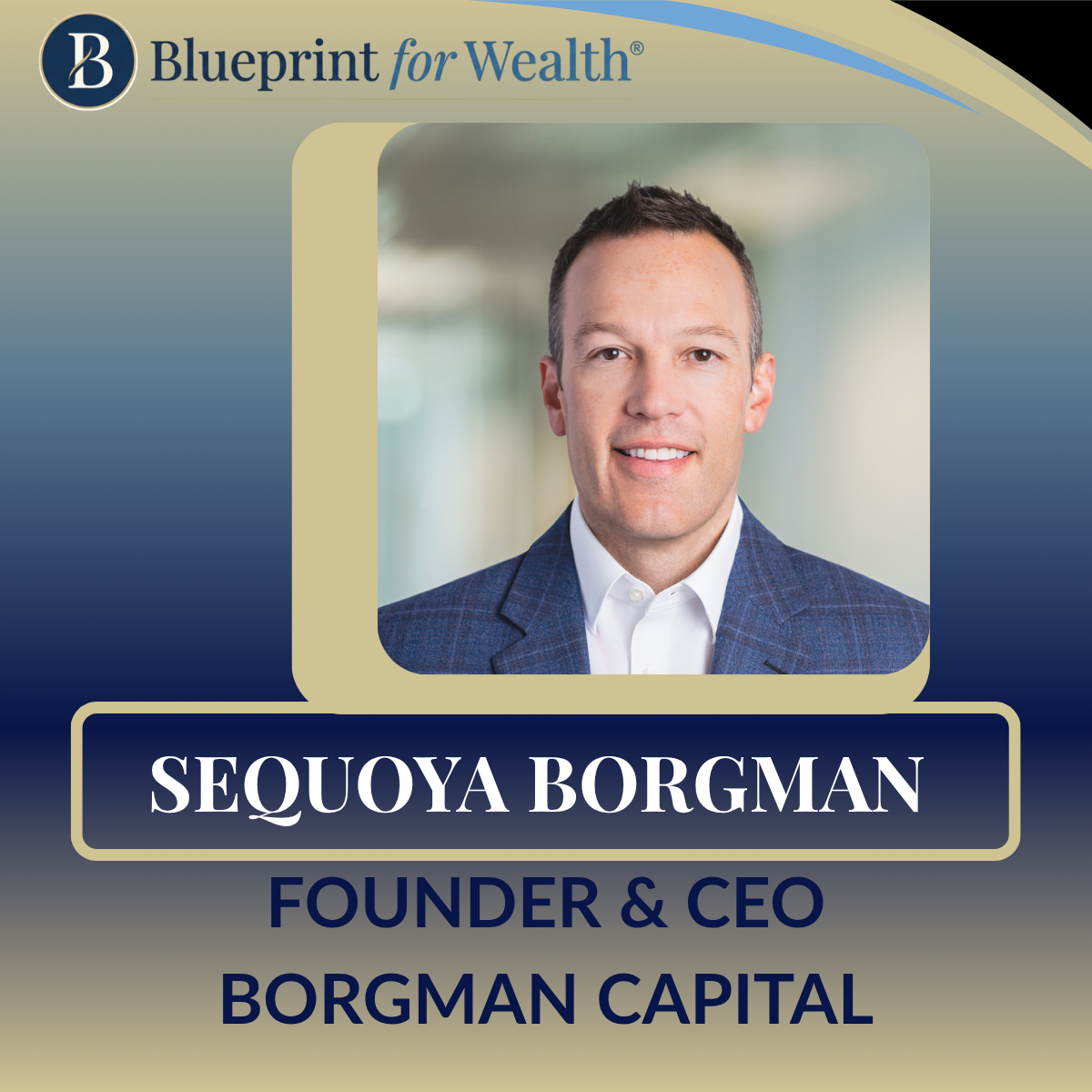
Transitioning a founder-led business into a professionally managed platform is one of the most critical inflection points in lower-middle-market private equity. On an episode of The Private Equity Podcast, hosted by Alex Rawlings, Founder and CEO Sequoya Borgman reflects on the lessons learned across 19 completed acquisitions at Borgman Capital. Drawing from his transition from public accounting partner to independent sponsor, Sequoya explains why people dynamics, executive leadership fit, and relationship trust consistently outweigh financial engineering. He outlines how patient value-creation timing, flexible deal-by-deal capital structures, and direct local sourcing form the foundation for sustainable growth in lower-middle-market companies.
Listen to the full conversation between Alex Rawlings and Sequoya Borgman to explore the mechanics of lower-middle-market acquisitions and founder alignment.
Key Takeaways
People Dynamics and Cultural Fit Drive Acquisition Outcomes
Investing in lower-middle-market companies is fundamentally an investment in people rather than a financial-modeling exercise. Replacing an outgoing founder with an executive who lacks cultural fit or moves too aggressively can alienate key employees and damage long-term customer relationships. Smaller businesses typically lack extensive corporate support functions and blue-chip infrastructure. Because these organizations rely heavily on daily execution, selecting leaders with the right operational capability and organizational fit is the single most important factor in securing portfolio growth.
Patience and Sequence Preserve Value During Founder Handoffs
Attempting to force an aggressive value-creation plan while a founder is actively running the business often creates friction and destabilizes operations. Founders usually care deeply about preserving their legacy, protecting employees, and ensuring future business health. Allowing a transitional period of 6 to 24 months—and delaying major operational shifts until a new president or operating executive is in place—ensures that operational change builds momentum rather than resistance.
Independent Sponsorship Offers Strategic Alignment with Sellers
Operating as an independent sponsor provides deal-by-deal flexibility that traditional fund structures cannot match. Without a fixed fund mandate or rigid mandate-driven deployment clock, capital can be tailored to individual opportunities and held across extended horizons of 10, 15, or 20 years. This long-term alignment appeals directly to founders who have built companies over decades and prefer long-term stewardship over rapid turnarounds.
Local Networks Source Superior Proprietary Opportunities
While broad auction processes represent a large volume of deal activity, direct relationships yield the most aligned opportunities. Establishing trust with local M&A attorneys, accountants, corporate bankers, and regional advisors creates proprietary introductions to business owners. Direct dialogue allows buyers and sellers to agree on transaction terms that directly reflect the founder's long-term vision for the organization.
Questions Addressed in the Conversation
What is the biggest risk when transitioning a founder-led business?
The primary risk in a founder-led transition is leadership and cultural mismatch. Selecting an executive who tries to implement sweeping operational changes too quickly can destabilize company culture and push away crucial employees and key customers. Managing this transition requires open dialogue about post-close roles, maintaining founder alignment through retained equity or advisory involvement, and ensuring incoming leadership fits the existing team culture.
Why does Borgman Capital utilize the independent sponsor model instead of a traditional fund?
Borgman Capital utilizes the independent sponsor model because finding quality businesses at reasonable valuations is scarcer than securing equity capital. A deal-by-deal structure eliminates single-fund mandates, allows flexible holding periods tailored to the company's needs, and provides a compelling alternative for sellers seeking stable, long-term ownership over a fast fund-driven exit.
How do lower-middle-market businesses compensate for limited internal corporate resources?
Smaller businesses often lack extensive internal departments for executive recruiting, human resources, and strategic scaling. Sponsors can address these resource gaps by providing access to experienced operating partners, specialized HR advisors, and dedicated talent acquisition channels. Placing experienced leadership guidance and operational support alongside portfolio executives allows the broader business mechanics to fall into place smoothly.
From the Conversation
“You’re really investing in people when you buy these lower-middle-market companies. The transition from a founder-led company to a more professionally managed business is a huge risk... If you have the right leader and leadership team in place, the rest falls into place.”
-
This transcript has been edited for clarity and readability. Please refer to the original podcast recording for the complete conversation.
From Public Accounting to Private Equity
Alex Rawlings: Welcome back to The Private Equity Podcast by Raw Selection. Joining us today is Sequoya Borgman, founder of Borgman Capital, a lower-middle-market private equity independent sponsor. He’s going to share his journey from setting up the firm in 2017, the challenges he’s faced and how he’s overcome them. Let’s dive in. Sequoya, if you can share a brief insight into you, please.
Sequoya Borgman: I’d be happy to. Thanks for having me on the show. My background: I came out of school, got a master’s in accounting and joined one of the large public accounting firms, Arthur Andersen, at the time. I really focused on transactions for most of my career after Andersen. I went to a couple of other big firms and became interested in private equity transactions and M&A. I did that for about 20 years and was a partner. At that point in my career, I decided I wanted to do something a little more entrepreneurial.
A lot of my private equity friends whose transactions I was working on were having a lot more fun, so I decided to leave public accounting and start a private equity firm here in the Midwest. That was in 2017, and I really haven’t looked back since then.
Over eight years, we’ve bought 19 companies, and we have two more under LOI that we’re close to closing shortly. We’ll be over the 20 mark soon. We focus on nice, cash-flowing, established lower-middle-market businesses all around the country. We buy businesses with under $200 million in revenue and under $20 million of EBITDA—mainly family- or founder-led businesses.
We have an office here in Milwaukee, where I am, and another office in Minneapolis. We just added a value creation lead on the West Coast, so we’re spread out across the country. We look at about 1,500 deals a year, again focusing on nice lower-middle-market companies. We have 13 people on the team, and we can average three to four acquisitions a year.
Managing Founder Transitions and Leadership Risk
Alex Rawlings: Congratulations on the journey so far. What is one mistake you see private equity firms or portfolio companies making, and what do you suggest to correct it?
Sequoya Borgman: It’s all about people. You’re really investing in people when you buy these lower-middle-market companies. The transition from a founder-led company to a more professionally managed business is a huge risk. I’ve seen that mistake made quite a few times. We’ve personally made that mistake by hiring the wrong leader to replace a founder. Maybe the person doesn’t have the right cultural fit, or tries to do too much too fast and ends up chasing off key employees or customers. That happens quite a lot.
We try to do everything we can to manage that risk. We keep the founder involved and keep skin in the game with the founder so their interests align with ours. We want nothing more than for the business to continue to be successful, and, for the most part, founders want their businesses, legacies and employees to continue to be successful as well. How you go about that is sometimes where the tricky part comes in.
Alex Rawlings: How are you mitigating that then? Because the change from founder-owner to what is, in perpetuity, an employee… most entrepreneurial type owner profiles don’t tend to lean to that too well and there’s usually a reason they’re selling. How have you mitigated that factor when the transition happens to make it more effective or less painful for the owner-founder?
Sequoya Borgman: Sometimes the founder stays around for a longer period of time and is in for a second bite of the apple, but in the majority of businesses we buy, the founders transition out after six, 12, 18 or 24 months. I find the best way to make that transition happen is to be very open and honest with the founder, and have them be very open and honest about what they want to do with the business after they transition out.
As you said, most entrepreneurs and founders start or own a business because they want to be the top decision-maker. They don’t want to be told what to do. It’s tough when you have new ownership. They don’t have control, there’s an outside board, and people may have great ideas, but those ideas may not align with what the founder wants to do.
We try to wait until we bring in a new president before we really start implementing our value creation plan. We don’t force those changes down the founder’s or owner’s throat while they’re still running the business. It’s a slower process, and we’ve found that works much better than coming in on day one and trying to transform the business. It usually takes 12 to 24 months before we start implementing the value creation plan.
Lessons from 19 Acquisitions
Alex Rawlings: You mentioned 19 acquisitions so far, so congratulations—more than two a year currently. What lessons have you learned that you wish you knew on acquisition number one and have adopted by number 19?
Sequoya Borgman: Again, it’s all about the people. Businesses go through cycles. Over the last five years, with the challenges since COVID started, there have been ups and downs across all the businesses. There’s always one that’s facing more external challenges than the others. But as long as you focus on the fundamentals and what’s within your control, those situations end well.
It’s more about the people side of the businesses: managing the people, managing the leaders and having the right leaders in place. That’s the biggest challenge. It’s not finding the businesses, financing the businesses or putting the equity in. It’s really the people dynamics. It’s almost more HR-driven than anything else, especially in these smaller middle-market businesses. They don’t have the resources a large organization does. They don’t have all the departments and professional groups that can help with the challenges that pop up daily. The biggest challenge is the people side of the business.
Alex Rawlings: What have you done to drive that? Small businesses don’t have enough divisions or the extensive support functions found in the big blue-chip corporate world. What are you doing as a private equity firm to support that and enable growth?
Sequoya Borgman: As I said, we have 13 people on our team. One of our managing directors has a background running very large corporations and is a former CEO. He helps all the leaders on a weekly basis, and then we bring in resources as needed. We don’t wait when changes need to be made. We have HR consultants and recruiting groups we’ve worked with in the past to bring in the right individuals to lead those businesses. We find that’s key. If you have the right leader and leadership team in place, the rest falls into place.
Why Borgman Capital Uses the Independent Sponsor Model
Alex Rawlings: From an independent sponsor perspective, why did you choose that route rather than traditional fundraising or raising a fund?
Sequoya Borgman: Originally, the plan was to do a couple of deals and then raise a fund, like most new managers. But after the first couple of deals, fortunately, we had started at a great time. 2017 was a great time to start a firm. I think it would be much tougher right now in the current fundraising and financing environment. From a timing standpoint, it’s often better to be lucky than good.
We started in the middle of a great decade for private equity and got a couple of great deals in that first year. Once we had a committed investor group, which was established right off the bat, there was really no need to raise a fund. Besides the first deal, we’ve been oversubscribed on all our acquisitions from day one. We now have a well-established group of more than 450 LPs who have invested with us over that eight-year period.
The equity side of the equation isn’t the hard part. Finding great investment opportunities is the hard part. With that being the challenge, we’ve decided not to raise a fund to this point. I’m not saying we won’t do it sometime in the future, but there have been articles recently about a large rise in independent sponsors. That’s being driven by the fact that the hardest part is finding the investment, not the equity. The equity is out there.
I think many more managers are choosing the independent sponsor route. It gives you flexibility. You don’t have one fund mandate with one industry focus. You can be much more opportunistic about which deals you pursue and which opportunities present themselves. You can also have a longer-term hold period. That definitely resonates with sellers who often don’t want to sell to someone who is going to flip the business in two, three or four years. They’ve normally grown that business over 30 or 40 years and want to sell to someone who can hold it for 10 or 20 years. With our model, we’re able to do that.
Alex Rawlings: Is it typical for you to have an extended hold period? Are you mostly at 10 or 15 years-plus?
Sequoya Borgman: We’re like any other private equity firm. We’re driven by cash-on-cash returns and IRR. Shorter hold periods drive a higher IRR, although maybe not a higher cash-on-cash return. There is alignment and some pressure from investors to have a shorter hold period. Once you exceed your investment expectations, my view is to sell those businesses if it’s a good market. But if it’s a nice, cash-flowing business, we can pay distributions and hold it for 10, 15 or 20 years as well. We have that flexibility.
Building an Investor Base and Expanding Access
Alex Rawlings: You referenced 450 LPs and building that investor base to fuel you. Have you typically made the most of the newer retail individual investor landscape, as opposed to traditional institutional capital?
Sequoya Borgman: From the beginning, our investor backing was primarily family offices, high-net-worth individuals and ultra-high-net-worth individuals. That has grown over the years. As they talk to one another, their colleagues get into the next deal, and so forth.
Last year, in 2024, with the rise in retail investor focus, we launched a separate platform, Pass the Hat, at passthehat.com. It’s focused on retail investors—accredited investors and high-net-worth individuals—who want access to lower-middle-market deal flow that they may not otherwise have. Many of the bigger firms are establishing retail funds, primarily through IRAs and other sources, but there are few platforms like ours that give investors access to direct investment in a leveraged buyout model. There are many platforms for real estate and venture capital investments, but few for traditional private equity.
Finding Deals and Growing the Firm
Alex Rawlings: You said the difficult part for you can be deal flow. You’re appearing on this podcast to get the brand out there. What else are you doing to increase deal flow exposure and encourage people to choose Borgman over somebody else?
Sequoya Borgman: Finding good investment opportunities at reasonable valuations is the hardest part of what we do, and what all private equity funds do. It’s a competitive landscape. Large, good businesses have plenty of buyers. We see more than 1,500 deals a year. Many are investment-banked or brokered deals, and those are often not the best investment opportunities for us personally.
We like opportunities where we’re introduced directly to the founder. We establish a relationship and a level of trust with that founder, and we’re able to agree to terms that align with their future vision for the business. Those are the best opportunities for us and the deals we’re really looking for.
We’ll also partner with other independent sponsors. Maybe it’s a one- or two-person group that needs a partner or help getting a deal done. They may find a deal and have it under LOI, but not have the equity or resources for all the diligence and everything it takes to get a deal over the finish line. We’ll partner with other groups to do deals as well.
Alex Rawlings: Besides coming on podcasts like this, what else have you done to increase your exposure and awareness of you and the firm?
Sequoya Borgman: We have people around the country, and I feel that the best proprietary deals come through your local network. In secondary cities, you know the M&A advisors, attorneys, accountants, insurance professionals and corporate bankers. That’s where you find the best opportunities.
Having people in other locations helps, and we’re continuing to expand. We’re talking to a couple of people right now about joining the firm. We would add deal origination professionals who sit in markets where we aren’t currently present. We see that as the future growth of the firm and where we find the best opportunities: being introduced through our network to someone who wants to sell a business.
Books, Podcasts and the Role of AI
Alex Rawlings: What are your influences? What do you read, watch or listen to that you recommend others check out?
Sequoya Borgman: Besides your show, of course, I’m a big podcast listener. I love the Acquired podcast, and I think everybody listens to the All-In Podcast these days. Those are two of them. I read everything I come across and have a lot of books on my nightstand right now. I’m halfway through AI Made Simple by Rajeev Kapur.
I think AI is transforming what we do, our industry and all our businesses. There are a lot of efficiencies to be gained. I was talking to one of my partners this morning about how we could get the 1,500 CIMs we look at each year analyzed by AI. It would save our analysts a lot of modeling and time, and I know they would love that. If there’s someone with an AI product that can maintain the confidentiality of that information and help us analyze those books, please reach out to me.
Alex Rawlings: That’s something we’ve leveraged significantly. I’m interested in the AI piece. We’ve begun to leverage that in our business. What else have you taken from the AI book, if anything, so far?
Sequoya Borgman: Just the daily stuff. I’ve used it personally quite a bit for vacation travel and similar things. But our attorneys have advised us that much of what we do is very confidential. We sign lots of NDAs, and it’s very hard to use some of the large platforms to analyze information, help us or even record our board meetings without stronger confidentiality guardrails around AI.
Alex Rawlings: That makes it difficult. You said you’re a big reader. What are the top two books you recommend everybody should read?
Sequoya Borgman: I’m reading Do Hard Things by Steve Magness right now. That’s a great book. I climbed Mount Kilimanjaro last year. I’m big on pushing yourself both mentally and physically, so I highly recommend that book.
I would also highly recommend AI Made Simple by Rajeev Kapur. The subject is changing so quickly that they should probably write a new book every month. I do think AI is going to affect all the businesses we invest in and the industry overall. Staying ahead of it is key for anyone listening.
Alex Rawlings: It will certainly bring opportunities for everybody to leverage. If anyone wishes to reach out, how should they get in touch with you?
Sequoya Borgman: They can reach out through our website, borgmancapital.com. Accredited investors interested in looking at our investment opportunities can visit passthehat.com. They can also reach out through LinkedIn. A lot of people contact me there, so there are multiple ways to get in touch.
Alex Rawlings: Thank you very much for coming on the podcast and sharing your journey so far—19 acquisitions and, hopefully, two more coming soon. You’ve given us insight into what it’s like running an independent sponsor and your journey so far. Thank you for coming on.
Sequoya Borgman: Thank you for having me.
Alex Rawlings: And, as always, thank you very much to all our listeners for tuning in again to The Private Equity Podcast. Until next time, keep smashing it, and thank you very much for listening.