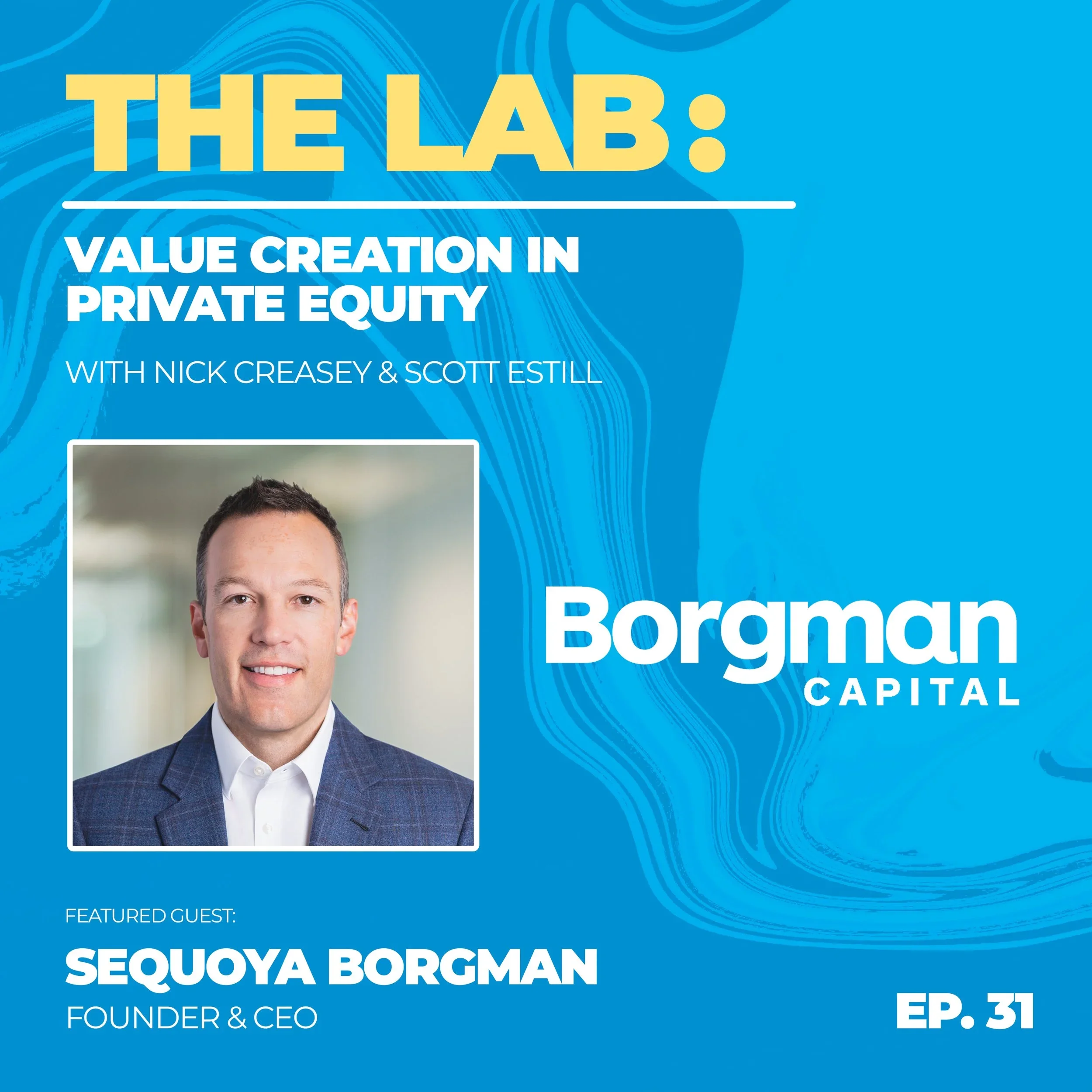
When Equity Oversubscribes 2–3x: Managing Capital Allocation, Valuation Discipline, and Deal Sourcing
Sequoya Borgman, Founder and CEO of Borgman Capital, joined hosts Will Smith and Nicholas James on the Minds Capital Podcast to share his practical approach to lower-middle-market private equity. Grounded in a disciplined value-investing philosophy, Sequoya discusses how maintaining strict valuation caps protects capital while driving long-term operational growth. The conversation covers the practical application of Section 1202 Qualified Small Business Stock (QSBS) tax incentives, the mechanics of managing oversubscribed deal equity across a network of accredited investors, and the structural requirements for scaling an independent platform's deal-sourcing engine.
Listen to the full conversation to learn how Borgman Capital combines disciplined underwriting, tax-efficient structuring, and collaborative sourcing models.
Key Takeaways
Strict Valuation Ceilings Protect Capital in Flawed Markets
Relying on multiple expansion to deliver equity returns in the lower middle market creates unnecessary investment risk. Borgman Capital operates under a firm value-investing model, capping purchase multiples at approximately 7x EBITDA across 22 historical acquisitions. Rather than overpaying for competitive assets, value creation must be underwritten directly through operational improvements, organic revenue growth, margin expansion, debt reduction, and leadership alignment. Setting clear valuation boundaries forces deal teams to focus on businesses with strong underlying cash flow and genuine operational upside.
Tax Structures Should Enhance Value, Not Drive the Acquisition
Section 1202 Qualified Small Business Stock (QSBS) offers substantial tax advantages for investments in qualified C-Corporations, including potential 100% federal capital gains tax exemptions after a 5-year holding period, with partial exemptions beginning at 3 and 4 years. While these benefits yield significant after-tax returns and eliminate complex multi-state K-1 tax filings for investors, tax policy should never serve as the primary thesis for buying a company. Deals must stand on their operational merits, EBITDA expansion, and structural stability first, using QSBS tax savings as an added tailwind rather than a crutch.
Retail Investor Networks Function as Operational Strategic Assets
Building an investor network of over 500 accredited high-net-worth individuals provides advantages far beyond transaction capital. Maintaining open, transparent communication through detailed quarterly reporting transforms passive LPs into active deal originators, talent scouts, and industry advisors. When investors possess direct experience running operating companies, they frequently introduce qualified customer leads, prospective executive hires, and proprietary acquisition opportunities. Treating investors as long-term partners builds a durable operational ecosystem around the firm.
Sourcing Infrastructure Requires Dedicated Sourcing Capital and Partnership Models
As capital-raising capabilities mature, deal origination becomes the central growth constraint for private equity platforms. Scaling past transactional deal flow requires dedicated sourcing headcount, specialized marketing platforms, and open collaboration with independent sponsors and searchers. Partnering with independent deal-seekers by sharing back-office infrastructure, underwriting support, and capital access creates a mutually beneficial execution model. Broadening sourcing networks through fair profit-sharing ensures consistent quality pipeline without sacrificing underwriting standards.
Questions Addressed in the Conversation
How does Borgman Capital handle oversubscribed capital raises during deal syndicate launches?
When individual deal raises attract 2x to 3x the required equity, Borgman Capital manages oversubscription using strict pro-rata cutbacks to ensure fair allocation among existing investors. To control capital flow, the firm shortens promotion windows and limits outreach during smaller equity raises. Investors who are scaled back receive priority allocation on subsequent deals to maintain trust and transparency across the network.
What industries offer the strongest long-term stability against technology-driven disruptions?
Sequoya focuses on infrastructure, industrial services, and deferred maintenance businesses, such as road and bridge repair, runway maintenance, and wear-parts manufacturing. These sectors feature persistent market demand funded by public budgets and long-term capital plans, making them resilient to technological obsolescence or AI-driven industry shifts.
When is the right time to sell a portfolio company?
Exit decisions should be guided by performance targets, leverage ratios, and market demand rather than rigid hold timers or arbitrary "forever hold" rules. Sequoya advises that when a portfolio company achieves its long-term operational milestones early and market buyers offer full valuation multiples, fiduciaries must capture those returns for their investors rather than risking future market cycles.
From the Conversation
“We are value investors at heart. In 22 deals, the highest multiple we’ve ever paid is roughly 7x EBITDA. We don’t underwrite to multiple expansion; we underwrite to EBITDA growth, cash flow, debt paydown, and better leadership.”
-
Description text goes here